Some of the content of this post was originally posted with the spaceship collection update, Here they are again, together with some more untested ideas. Including a challenge test for restarting an offline reactor due to damage.
Ship Qualities
The Couple Reactor and Parallel Reactor qualities do the same thing in different ways. I’d suggest you to choose one to test in your game. I prefer the Parallel Reactors for gameplay reasons, but I can see arguments for preferring “Coupled Reactor”. The third, Backup Reactor, is not as convenient, but would be arguably cheaper and more “realistic”? I leave any Income test TN for adding any of these as a retrofit up to GM’s discretion, however Backup Reactor should perhaps be slightly cheaper, at least to install.
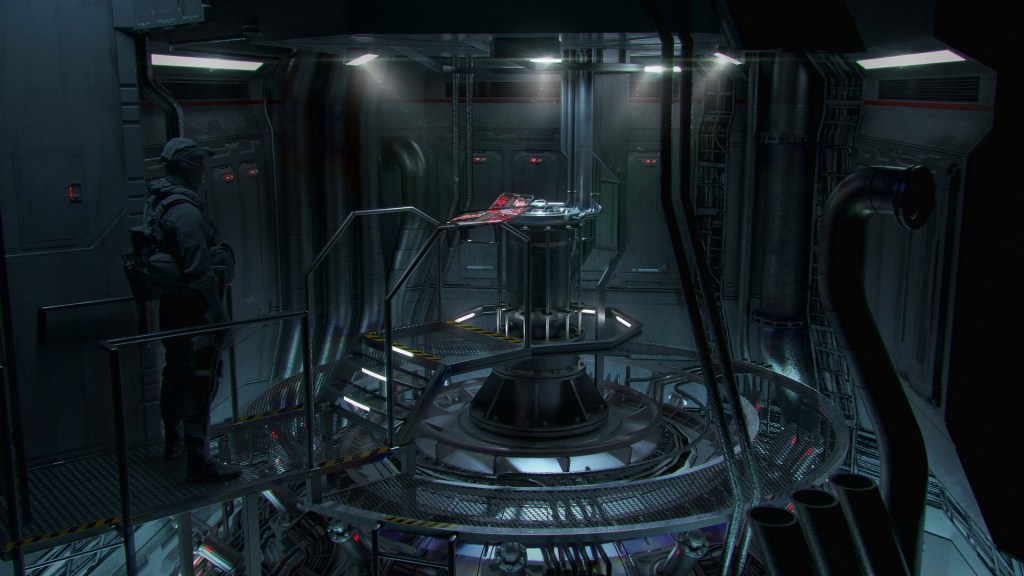
Backup Reactor (Quality): Ships has been fitted with an extra reactor for redundancy. Only ships of size Large or larger may be fitted with this quality. When a ship with this Quality takes the Reactor Offline Serious Loss, the backup reactor can be started up. During the startup process the ship is subject to the Reactor Offline conditions on page 138. Depending on the crew’s preferences, it may be an automatic sequence starting with the main reactor shutting down, automatically at the flip of a switch, or a manual process. The automatic (reactive or flip switch) process is a fairly safe process requiring only a Basic TN 11 Intelligence (Technology or Engineer) test that takes 15 minutes. The manual process requires a TN 13 Advanced Intelligence (Technology or Engineering) test, with a threshold of 20 and time increment of 1 minute. Any failed tests restarts of the power-up process. Ship must be built with this Quality, although rumours have it that some OPA shadow ports, and UNN and MCRN shipyards, have experimented with retrofitting ships with backup reactors, at very high costs. The ship also gains the High Maintenance Flaw, increasing the Lifestyle Cost of the ship by +1 (or more, GM’s discretion). Ships with this quality generally have significantly reduced internal space (depending on ship size), usually reducing cargo capacity to make room for the extra generator.
Coupled Reactor (Quality): Ship has an additional reactor. Only ships of size Large or larger may be fitted with this quality. This backup reactor ensures complete power redundancy. The ship can ignore the first Reactor Offline Serious Loss suffered in space combat. The ship must be built with this Quality, although rumours have it that some OPA shadow ports, and UNN and MCRN shipyards, have experimented with retrofitting ships with coupled reactors, at very high costs. The ship also gains High Maintenance Flaw, increasing the Lifestyle Cost of the ship by +1 (or more, GMs discretion). Ships with this quality generally have significantly reduced internal space (depending on ship size), usually reducing cargo capacity to make room for the extra generator.
Parallel Reactors (Quality): The ship runs two reactors in parallel to ensure full redundancy. It is capable of losing one reactor and still remain at full power. Ships of size Large or larger may be fitted with this quality. The ship can take two (2) Reactor Offline Serious Losses in space combat before losing power to its Epsteins and having to rely on battery power. The ship must be built with this Quality, although rumours have it that some OPA shadow ports, and UNN and MCRN shipyards, have experimented with retrofitting ships with backup reactors, at very high costs. The ship also gains High Maintenance Flaw, increasing the Lifestyle Cost of the ship by +1 (or more, GMs discretion). Ships with this quality generally have significantly reduced internal space (depending on ship size), usually reducing cargo capacity to make room for the extra generator.
If added as aftermarket qualities, any of these generator qualities could also add flaws beyond what is listed, such as poor amenities and vulnerable systems. This depends on what the PCs are willing to pay, who performed the modifications, and the result of any tests to install it that the GM finds relevant – they should be possible to remove through adventuring, pay, new parts, and work on the PCs part.
Retrofitting civilian ships and light crafts into a vessel that can better endure the dangers of space combat and punching above their weight is not as uncommon an occurrence as the UNN and MCRN wants you to believe. While armor plating is fairly common, installing larger and more weapons, is less so, but still possible – even if it’s illegal. Stealth coating allows crews to cover their ships with stealth paint that decreases risks from both piracy and navy patrols, if they can somehow acquire it…

Paramilitary Refit (Quality): This quality allows a ship to be fit with larger or more weapons than is typically deemed safe and reasonable. For instance, a Small ship can now be armed with a single torpedo launcher or rail gun, or a Medium ship can be upgraded to carry two torpedo launchers, two rail guns (one in each direction), or one high-charged rail gun. This usually reduces space on the ship in an effort to maintain structural integrity, make room for ammunition, and other related systems. It includes fairly substantial structural changes to the ship.
Paramilitary refit should have an Income test TN of the added weapon and then increased by an appropriate amount, at least +15 (a lower modifier should be combined with flaws). If adding stolen or salvaged weapons the base TN should be at least TN 20 (anything lower should be combined with flaws). GM’s should feel perfectly free to add a suitable flaw or two, such as Faulty System, High Maintenance, Fragile, Poor Acceleration, Uncomfortable, Lumbering, or Vulnerability, based on who does the work, what ship is modified, how much the crew paid, and other relevant considerations.

Stealth Coating (Quality): Using pilfered High Density Resonance Coating, an energy-absorbent coating that the MCRN uses to help their ships avoid detection (also known as stealth paint) and aftermarket (jury-rigged) heat sinks, a crew can reduce the ship’s sensor visibility. When applied, the ship is harder to notice and identify, all other ships have -2 to all Sensor tests to notice, target, and identify the ship. Ships and stations at long and extreme ranges have an additional -1. This coating does not render the ship invisible to sensors when engines are turned off (that effect requires combination with appropriate composite materials, active cooling systems, and any other tech that the MCRN use to build their stealth ships. The Sensor penalties above can, if the GM prefers, be limited to when the ship is powered down and/or on the float). Electronic Warfare tests against the ship at medium range or further away have a -1. Suffering more than 3 Hull Losses renders this Quality useless, and the HDRC must be reapplied.
Stealth coating is not readily available for sale even among black marketeers. Any acquisition is either by theft or as a reward for a mission. If a GM wants to make it available to buy, say after the Free Navy conflict there could be a few barrels left around, the Income test TN should be upwards of 30, allowing for some variation depending on ship size. GM’s should feel perfectly free to add a suitable flaw or two, such as Wanted, Banned From Port, or High Maintenance (to reapply, clean, and so on).
Damage Control and Repair Challenge
In most situations, where a reactor has gone offline due to ship combat – and assuming the core hasn’t been dumped – repairing it is an Interlude activity, most likely at an appropriate space station with repair facilities and a drydock. Ships of the Expanse also covers restarting a reactor (page 44). However, for the daring – and competent – engineers and crews, I offer the following Challenge Test to try and get an offline reactor (from a Serious Loss) back online, whether during space combat or straight afterwards:
Emergency (re)start a reactor turned off due to ship damage (Challenge test)
Success Threshold: 20
Ability Focuses: Intelligence (Technology) TN 15; Intelligence (Engineering) TN 15; Intelligence (Science: Physics) TN 13.
Time per test: 1 minute per test (or 1 round of space combat)
Consequences:
- Minor
The system throws errors and starts shutdown procedure, make a TN 13 Intelligence (Technology) test to stop shutdown, on a failure make a TN 11 Constitution (Tolerance) test or take 1d6 damage from radiation as the reactor shuts off. Future tests increase TN by +2 as more safety measures and warnings hamper progress. (Optional: also, increase Churn by +1). - Moderate
Reduce accumulated progress by 2+ Drama Dice result on failed test as the system throws errors of overheating; make a TN 17 Intelligence (Engineering) test to prevent overheating and emergency shutdown, on a failure make a TN 13 Constitution (Tolerance) test or take 2d6 damage from radiation as the reactor shuts off. (Optional: also, increase Churn by +2). - Major
Alarms blare as containment loss is imminent, make a TN 15 Intelligence (Science: Physics) or TN 17 Intelligence (Engineering) test to prevent containment loss and dumping the core, on a failure make a TN 15 Constitution (Tolerance) test or take 3d6 damage from radiation as the ship dumps the core. (Optional: also, increase Churn by +3). - Epic
Alarms blare as containment fail, make a TN 21 Intelligence (Science: Physics; or Engineering; or Technology) test to prevent reactor going critical. On a failure: Make a TN 17 Constitution (Tolerance) test or take 4d6 damage from radiation; and/or refer to page 44 of Ships of the Expanse to deal with overloading reactors (and get a hazmat suit due to ongoing radiation leakage); or simply “Game Over” as ship becomes a brilliant and short-lived star brightening an otherwise dull afternoon.
How to use this challenge test:
- Considered and reflective GM’s discretion is needed here to ensure fun gameplay, understanding of player expectations, and to convey the actual risk.
- Suggested # of failures to activate first consequence: 2.
- After dealing with, or suffering, a Minor consequence for the first time, if the next test is a failure, it is fine to let it go with no consequence. Any further failure activates either a Minor or a Moderate consequence.
- After dealing with, or suffering, a Moderate consequence for the first time, if the next test is a failure, it is fine to let it go with no consequence, or optionally activate another Minor consequence. Any further failure activates either a Moderate or a Major consequence.
- After dealing with, or suffering, a Major consequence for the first time, if the next test is a failure, it is fine to let it go with no consequence, or optionally activate another Moderate consequence. Any further failure activates either a Major consequence again, the optional Epic consequence, or the ship automatically dumps the core.
- The optional Churn increase for each consequence level is for GMs that want to up the tension, regardless of success or failure on dealing with the consequences.
 The Expanse RPG Fan Community